Categories
Food & Nutrition

{Part 2} Wine Not?! The Wine:Body Connection

Yesterday, I began a 5-Part series on how I made the decision to cut back, or basically, “break-up” with my good friend WINE.

It was not an easy decision to make and it came with a PROCESS like all good changes do.

Today, I’m going to take you through my BODY‘s process and why I knew this change for my health was a much needed change for my BODY.

To get the context of how this particular health decision came to fruition I should explain that my body has been through A LOT of ups and downs because of my constant struggle with “trying to lose weight” and taking more and more severe measures to achieve that.

I would out myself as a “Strict-Binger” in the yo-yo dieting circus of my life.

Because I was so motivated to always get “leaner and leaner” I would practice incredibly STRICT diets of eliminating sugar, candy, high fat foods, grains and other carbs and replace them with protein supplements, artificial sweeteners and other “fake” processed food.

I would do this with a goal in mind, like, a vacation or a weekend night out. I would be super STRICT on my diet, exercise like a maniac (easily 2-3 hours a day) and then on my night out or vacation……BINGE city baby!! One drink of wine…..led to some cheese….which led to dessert and REPEAT until I basically fell out.

Then, as I inevitably put on anywhere from 5-10lbs over the weekend, out of guilt and shame I would go even stricter the next time around.

Each time, I would need larger and larger goals to keep me motivated to lose weight and workout like a crazy person!

This yo-yo mini-cycle eventually led me to the decision to do the bikini competition which I spoke about in my blog HERE. This competition required 5 months straight of no cheating, no alcohol, low low carb and high high protein. It was the longest I had gone on my overly strict regimen, for sure!

This bikini competition, like for so many of my fellow bloggers HERE and HERE and HERE came with some severe body consequences. I suffered from amorrhea (losing one’s menstrual cycle) and definite signs of nutrient deficiency throughout my body as well as some hormonal issues that I haven’t even figured out yet.

What was more, was the whirl wind part of my life was coming into high gear. My “ex boyfriend,” had decided to show up to my bikini competition as a surprise after 18-months of not hearing from or seeing him. As we reconnected a little on the day of my show about 5 days later called me and confessed he knew I was “the one” and then all of a sudden we were engaged! WHIRL WIND!!

So after a 5-month period of single living, uber strict eating, no alcohol, no cheating and crazy amounts of exercise…..within just a few short weeks, I was celebrating one of the most exciting times of my life and eating and drinking my way to enjoying it! Everything was cause for alcohol-with no one better than my best drinking mate of course! Everything was cause for celebration and indulgence and vacation after vacation after vacation!
So this ULTIMATE YO-YO of dieting lead to some pretty severe stomach issues. I still suffer from
digestive tract issues that I am not sure what is going on,

still ………after 18-months post-competition. 🙁

I AM making progress though and I have completely changed my approach on eating food. Instead of the Strict/Binge nutzo cycle, I now eat and promote a holistic approach to eating where you eat whole, unprocessed foods most of the time without being overly strict about it. I advocate this eating not just because it works for me (and my issues), but because it’s the most sustainable and least binge-inducing form of eating there is! Period.

So, as I cleaned up my eating quite easily (for me), there was this whole WINE issue that was clearly needing to be addressed in my body too.

One thing was certain, as fun as she was to hang-out with, my friend WINE made me feel pretty bad. Like, really, really bad.

While from a nutritional standpoint, I know alcohol wasn’t the only cause for my body issues, it certainly was a huge culprit that exacerbated the affects of all that was going on in my body.

Here’s why:

Alcohol has no nutrition. It has calories of course (7 calories per gram) but it is void of all vitamins and minerals.

(As a reminder) Among other functions, vitamins and minerals are the essential components that allow our food to be broken down to be used as fuel.

Vitamins and Minerals are absorbed in the gut, mainly the small intestine, and then carried all over your body to do their functional thing.

Now, I know what you are thinking! Yes, wine does have some nutrients because of those antioxidants from the wine skins, but the problem for someone like me, who was having some digestive issues, is the good does NOT out weigh the bad.

When we ingest alcohol, our bodies want to get it digested FIRST before anything else! It is what’s called “highly reactive,” biochemically speaking.

(If I might pull out some random memory of my degree in Biology/Biochemistry) the hydroxyl ending of alcohol (-OH) is highly reactive in our bodies, so it gets first priority to biochemical reactions as it gets sent down to the stomach, to the small intestines and over to the liver to be oxidized and metabolized (i.e. broken down).

This action overall slows down your metabolism because of our body’s need to oxidize alcohol so quickly to “detox” will lead to a slow down of ALL other systems. Some people who want to support their detox system make use of glutathione mercury detoxification so I hear. This is why some of my smart friends and mentors write articles about how alcohol inhibits fat loss too.

The problem is that not only is alcohol void of any vitamins and minerals itself, it is actually worse because it still requires vitamins and minerals from our body to get metabolized.

For this reason, it’s actually called an Anti-Nutrient because it basically steals the much needed vitamins and minerals from our bodies without replacing them!

So alcohol has been that friend that just takes and takes and takes and never gives anything back! Soooo rude, right?!

In addition to this fact, it can also lead to a whole host of other unfavorable affects. According to an article on the Telegraph.UK, alcohol “to varying degrees it can deplete minerals, affect microbes and bacteria in the gut, tax the immune system, interrupt sleep patterns, accelerate aging and lead to dehydration.

These adverse affects can get even worse for some of us experiencing digestive issues.

According to website Alcohol Rehab

  • * It can cause malabsorption so that the individual is not absorbing all the nutrients from food they need.
  • * It may cause leaky gut syndrome where unwanted toxins are able to leak through the intestine into the rest of the body. These toxins then cause problems and lead to ill-health.
  • * It can exacerbate irritable bowel syndrome
  • *Alcohol can cause both diarrhea and constipation

Well, no wonder I was feeling so CRAPPY grid-cell-5151-1407875654-5right?!

Obviously, there are certain things that may help some of the above. For example, I’ve heard of things like megasporebiotic probiotic or similar, possibly helping leaky gut syndrome. However, before you do anything, it would always be worth consulting your doctor first. Depending on your relationship with alcohol, your doctor may suggest different methods of treatment for your ailments. If you or someone you know is an excessive drinker or has an alcohol abuse problem, the doctor may suggest a visit to a rehabilitation center similar to The Holistic Sanctuary (https://www.theholisticsanctuary.com/rehab-centers/drug/) for extra support. This is because of the number of factors that could result from this kind of substance abuse.

In the same article, it also explains that for some really excessive drinkers, alcohol has actually not just shown poor nutrition, but MALNUTRITION. Malnutrition means that you are so severely nutrient deficient in macronutrient or micronutrients (vitamins and minerals), you are actually suffering sever body consequences and life threatening disorders. (wikipedia.com)

The reason is that because you are getting so many calories from the anti-nutrient alcohol, you are not hungry. When you’re not hungry, you’re not eating enough food to get the protein, energy and vitamins and minerals you need (or you’re just eating Taco Bell at 2am, which, let’s face it, is also not getting you many vitamins and minerals, either). It can become a very serious deal at this point!!

OK OK OK…..I can practically hear the whistles blowing and “Party Fouls” I’ve just been given though the interweb here. I get it, I’ve just put a major damper on some of your happy hour plans this weekend!

But, AGAIN, I am not here up on my soap box trying to tell YOU what to do. I am only telling you what was physically going on in MY body and one of the main reasons I had to step back.

Ultimately, alcohol does’t work so well in MY body. You might be one of those lucky people that has no adverse physical reactions to alcohol and might only feel some of the benefits that wine can bring. I’m just not one of those lucky ones.

If you are experiencing some intestinal issues or any other body symptoms that you think might be caused or exacerbated from alcohol, the only way to find out is to actually go through the process of elimination and reintroduction. This can go for ANY substance or food that you think might be giving your body some “issues”.

Elimination: For a period of minimum 21 days (preferably 30 days), you completely eliminate the food/drink group(s) from your system. Absolutely no cheating, sips, tastes or accidental ingestion. If you take one sip, you start your 21-30 days over.

Reintroduction: After going 30 days without the food/substance, you try moderately reintroducing it back into your diet. I have found the best practice to do this is to focus on just 1 meal, have a moderate portion of the item and take note of how you feel in the moment and how you feel the next day.

For some who are extra motivated, I always recommend the challenge “The Whole 30” and the book It Starts With Food by Dallas and Melissa Hartwig. They take you through 30 days of eliminating ALL things that might give a person digestive or body issues and then take the time to reintroduce each food group (including alcohol) back into your body. This is the best way to prove that your issues are caused by, say, alcohol, and not gluten AND alcohol.

It’s not an easy undertaking for some, and I always, ALWAYS caution my clients to see it as a testing experiment, NOT a diet of restrictive RULES to follow. The reason is that if you only focus on “losing weight” while restricting food/alcohol choices you will more than like binge on the foods when done (thereby making your 30-day experiment null and void) and you’ll be disappointed if you don’t “lose the amount of weight you thought you would by being so strict.”

Its a system that is not about weight loss, its about body awareness. A key distinction!

After all of this, you would think that after feeling these adverse BODY affects to alcohol, it would have been a ‘no-brainer’ to just go without, but my relationship with WINE was not over just because I knew it had some adverse affects on my body.

No, I had to dig deeper to get to this point. Tomorrow, I’ll share some of the awakenings I had to MENTALLY get to the point of being able to break-up with my friend WINE.

You’ll come back, right? I mean, WINE NOT?

Categories
Fitness & Training Food & Nutrition Uncategorized

Nutrient Based Timing! WHEN you eat can be as important as WHAT you eat!

Part II of my quest to create a Nutrient-Based society is taking a look at the timing of eating, especially when eating Nutrient-Based!

Just as a recap from Part 1 that I’ve been featuring over the course of the last couple of weeks (HERE) the importance of having a Nutrient focus with each of your meals will help ensure that you get enough of the necessary vitamins and minerals!    

Vitamins and Minerals are absolutely necessary to not just look better (brighter skin, acne control, stronger bones and teeth, muscle tone, etc.) but to also feel better (high energy, low fatigue, efficient digestion, internal organs all doing their job, better sleep, disease prevention and high immunity, etc.)

But, as you might have guessed, just being sure you are getting enough of the necessary vitamins and minerals does NOT necessarily mean that you are able to stay lean and fit! 

Quality of food IS an incredibly important step in the right direction, but it does not necessarily promote weight loss or physique goals!

So, the next part I want to introduce to the Nutrient Based Diet is the TIMING of when you eat.

While there are no rules  to Finding “A. Wright Fit” for yourself, I have found that there are definitely some benefits to monitoring your eating patterns and adjusting how often you eat!

It all boils down to just 3-Steps to Nutrient Based Timing! 

(click picture to view more clearly)

Nutrient Based Timing INFOGRAPHIC

(If you’re interested in getting this printable infographic for you to add to the 5-Steps of the Nutrient Based Eating that you can get by signing up HERE). 

Step 1: Go minimum 12-hours without eating every night.

Research has been showing more concretely lately that going extended periods of time in a “fasted” state at night, has been extremely effective in helping bodies avoid obesity, even when eating a high fat diet.  It has been termed Intermittent Fasting in the fitness community.

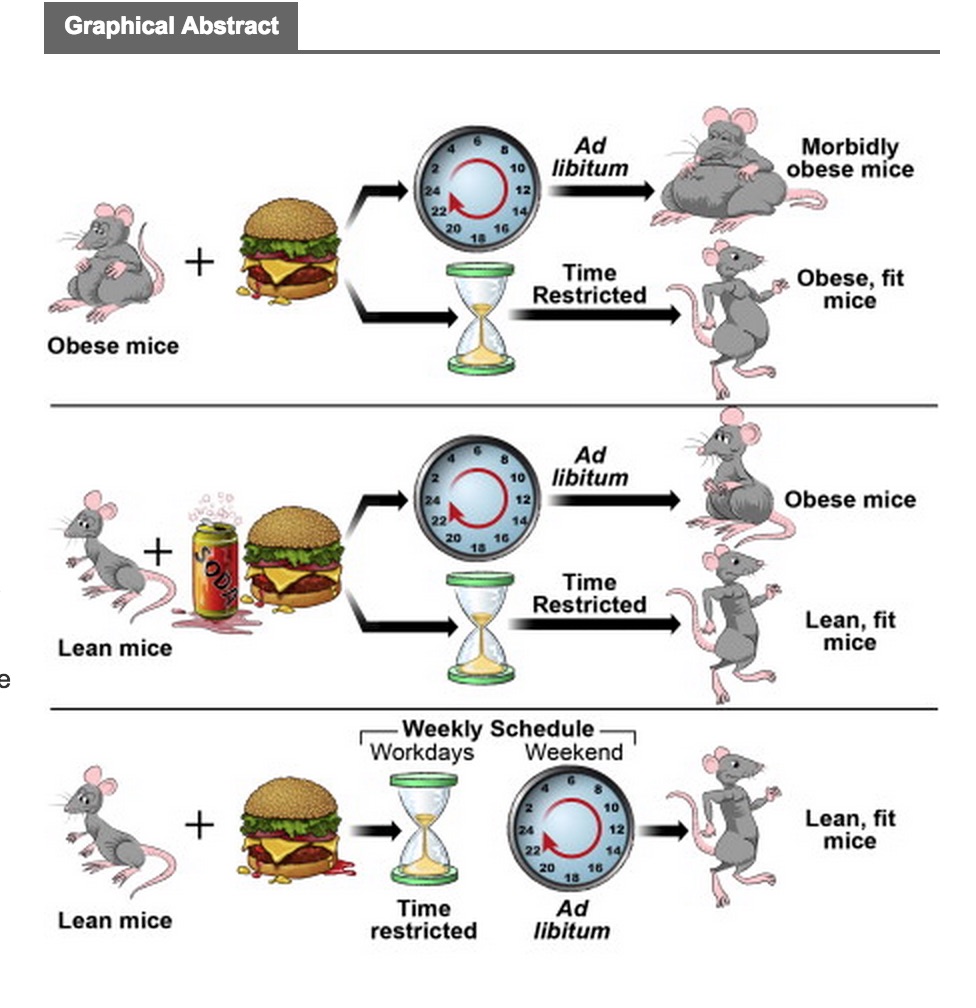
The concept of intermittent fasting was first introduced around 2009 and was popularized with a study that occurred in 2012. In this rodent research, three groups of mice were studied.  One group was fed healthy food and the two others were fed the the same “higher fat” diet.  Of the high-fat diet, one group was allowed to eat at all times of the day (“ad libitum”) and the other group was restricted to eating only 8-hours of the most active part of their day.  The group that actually restricted their diet to just the 8-hours of the day stayed just as lean as the group that ate “healthy” food.  But the group that ate the same amount of calories and food, but ate at all hours of the day, became obese!!   Read about this study HERE.

Even more recently, another follow-up study has been done over a less drastic fasting time range that has equally shown great results.  This study had 4 groups of mice fed differing diets and found that over a 38-week study, the mice that limited their food intake to just 9-12 hours of the day, were able to stay lean and fit no matter what diet they were given.  More importantly, the study also tested whether those same mice could take a “break on the weekend” (much like we humans do)  and indeed, they were still able to stay fit and trim mice even when taking those weekend breaks in fasting.    Here is the graphic from the study and link HERE.

Intermittent Fasting Mice Graphic www.cell.com

I have personally tried intermittent fasting both for the 8-hour eating window AND a 12-hour eating window and I find that both time frames work equally well to one another for my body. 

The difference I have found is that I’m much more uncomfortable when trying to go 16-hours a day fasted.  I have early morning stomach grumbles like crazy and I would rely more heavily on coffee and tea in the morning (without cream or sugar, or it doesn’t count!) which I found unsustainable for my lifestyle.

Now that I only eat 12-hours a day (and thereby fast for 12-hours a day), I find it much easier to implement  this into my lifestyle and now many of my clients too!

This is how it works:

If you finish your last meal by 8pm at night, then you simply drink water, plain coffee or plain tea in the morning until your first meal at 8am.

For those that are morning people, you may want to monitor your dinner the night before so you can have the breakfast you need at the time that more convenient. 

For those that are night owls, you might do just fine eating a little later of a dinner since you’ll be up later at night.   (See more about food timing after STEP #3 below)

Step 2:   Eat meals every 3-4 hours, with no snacking in between!

We live in a society where we have immediate access to food.  What a blessing that is! 

But with such access comes the unfortunate tendency to snack or “graze” all day long.  I call it “Drive by Eating” in my home.  Every time I come across the nuts in the pantry, I gotta munch on a few!   Every time I open the refrigerator for some water, I see the grapes and I gotta pop a few into my mouth! It is mindless and I’ve had to put some parameters on myself in an effort to stop!

Some of us have heard that we need to eat “every 2 hours” when trying to lose weight to “speed up our metabolism.”  But recent studies have actually debunked that myth.

The reality is that it all depends on your body and how fast your digest and break down your food.  It also depends on the size of your meal (which we’ll get to in Part III of the Nutrient-Based living!).   

So some bodies WILL eat 5-6 meals per day because they will digest their food fast enough.  But more commonly, most of us will eat 4 meals a day, which allows adequate time in between meals.

A list of benefits for allowing more time between meals is:

  • You are more likely to eat when you’re body is actually hungry, not just when you’re craving something. 
  • You give your digestive system adequate time to reset its digestive hormones and secretions necessary for adequate and efficient food break down.
  • The digestive rest in between meals is reseting your fat metabolism (i.e. You are in Fat Burning Mode!)
  • It helps regulate your hunger and satiety hormones (Ghrelin and Leptin, respectively)
  • Helps you maintain normal blood sugar and insulin responses. 
  • Helps maintain balanced mood.
  • Allows your body to use energy toward detoxing your systems instead of only focusing on digesting.

The amount of time you need to wait in between meals is unique to your body.  Since you are eating a full, Nutrient-Based meal for every meal, the size of this meal should take at least 3 hours to fully digest, if not more.  The fiber, the protein and the fat in our meals do take a while to break down. 

Some of you might have much faster metabolisms which means your body will become physically hungry much sooner. 

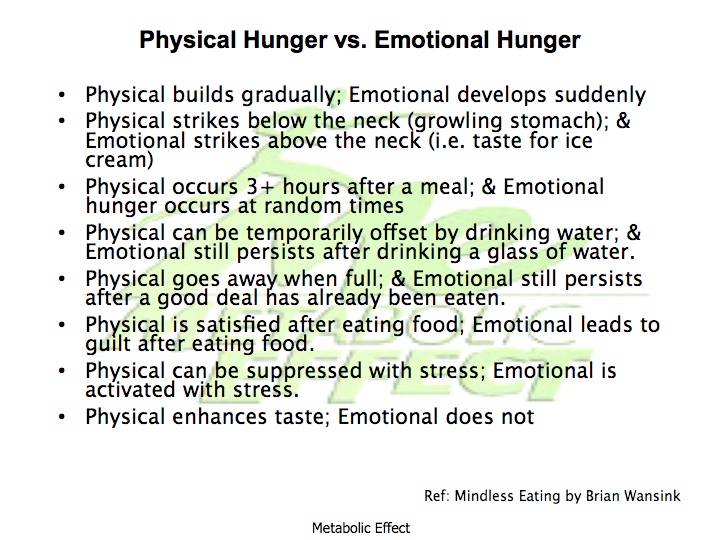
I encourage everyone to determine signs that you are “physically hungry” versus when you are mentally or emotionally craving something.    Here is a graphic from Metabolic Effect that I think sums it up really well!

Physical Hunger Verus Emotional Hunger Graphic

To ward off the tendency to have high cravings or emotionally eat in between meals, drinking water or herbal and green tea (without sugar or cream!) is really helpful in keeping your stomach happy and your body circulating!

STEP 3:  ATTEMPT TO EAT AT THE SAME TIMES EVERY DAY

The reason for trying to time your life to be similar day to day is because of the value add of going along with your Circadian Rhythms.  To get to the point, many functions in our body is regulated best in a rhythm, including when we eat!


To optimize these rhythms, the goal is to eat around the same time every day!  Your role for your body is to asses and see what times of day work best for you!

Circadian Rhythms are defined as: “physical, mental and behavioral changes that follow a roughly 24-hour cycle, responding primarily to light and darkness in an organism’s environment.” (National Institute of General Medical Sciences)

Essentially, it is our internal, or “body clock”, that regulates our hormonal responses, body temperature, heart rate and sleep cycles

Circadian Rhythms (CR) certainly contribute largely to our sleep/wake patterns in our life since they are highly regulated by the light and dark responses. 

But studies have shown that they can also be regulated by the timing of eating!  Eating at times when our bodies are in “rhythm” to eat is ideal for metabolic responses to be at their best. 

Our CR is mainly regulated by an area in our brain, the Hypothalamus, where about 20,000 neurons called the SCN (Superchiasmatic Nucleus) as the “master clock.”  But, recent studies have shown that the expression of our bodies “clocks” are not limited to just that area of the brain, but have been found in many tissues and cells throughout the body called the “peripheral tissues.”

Several studies  reported on in The-Scientist Journal HERE said:

“From these studies it’s clear that the clocks in peripheral tissues—vulnerable as they are to the timing of eating—are vital to metabolism in the body’s organs. “I would say the clock is playing a very fundamental role regulating all metabolic pathways,” says Takahashi, “not just in organ systems, but at a cellular level.”

Finding a patterned rhythm of eating that best supports your metabolism is one of the best things you can do to promote your healthiest, most energy efficient, and LEAN bodies possible!  

Sporadic eating does not contribute to helping find the natural “rhythm” of your body.  It causes some disruption to these natural rhythms and causes more internal stress than you know.   

In reality, we all know that we don’t always eat just when our bodies are hungry.  That would be too easy!

We eat largely because of behavioral and mental reasons too: 

  • -We eat just because it’s 12-Noon and we think “oh, I must have lunch!”. 
  • -We eat because we schedule that dinner with the couple at that certain time. 
  • -We eat because everyone else around us is eating.  We eat because we’re bored or sad or happy.

Just becoming more aware of an eating pattern (and sleep and wake pattern too!) is a great first step in finding your best rhythm for your energy!

WHAT TO DO:

  1. Map out your typical schedule.
  2. Start with the time you’d like to wake-up and the time you need to go to bed (getting 7-9 hours of sleep).
  3. Start with those personal qualities that are important to your eating life and require priority in planning.

—Do you workout early in the morning or evening?
—Does your family stress the importance of family dinners?
—Do you have a designated lunch hour that you need to stay within?
—Are there times of the day that you are most active and therefore most hungry afterward?
-If there is a particular meal time that you know you already are akin to, start THERE.  Don’t try to force something different from that important spot.

4.  From that time, designate a meal 3 hours before and 3 hours after (as many times as necessary) until you get about 4-5 meals. Some meals will be bigger some may be smaller.

5.  Assess and be sure that you are able to implement the 12-hour window of Step #1 given this timeline and map.

Allow me to use myself as an example:

*Everyday, I get up at 530am and go to sleep at 9pm-930pm.
*My main meal priority is my workout, which I typically do at 10am.  Therefore, my priority meal is right after this at 11am.

My schedule thus becomes:

Meal #1- 8am breakfast
Meal #2- 11am post workout
Meal #3- 2pm
Meal #4- 5/6 pm Dinner
(Meal #5- 8pm Post dinner snack (if I need it))

IF, I need to change my workout that day, I  still don’t change my meal timing.  I try to fit in the workout in a way that will allow be time to keep this schedule (so I’d try to workout at 12/1pm, or 4pm).

REMINDER!!!

As with all things about your body, this is an investment in time and requires patience for you to learn about YOU!  What works for me, may not work for you.  What works for you may not work for your sister!

But the payoff to some true, intentional investigation into your body, will be tremendous!  Remember, you are not put on this earth just to look a certain way!  You are put here for a GREATER PURPOSE!  Your LIFE must be LIVED in order to fulfill that!  Taking care of your health in your responsibility and the gift that you give back to God for the amazing, although at times HARD, life you have been given!

Your hard work will pay off in ways you can’t even imagine!  Just take it 1… 2…or  3 steps at a time!

Have any questions?  Comment below or contact me at amanda@amandawrightfit.com!